Frontline clinicians driving development of critical care training for the region
Content kindly contributed by Frank Kade of the Australian High Commission, and the Ministry of Health and Medical Services, Solomon Islands
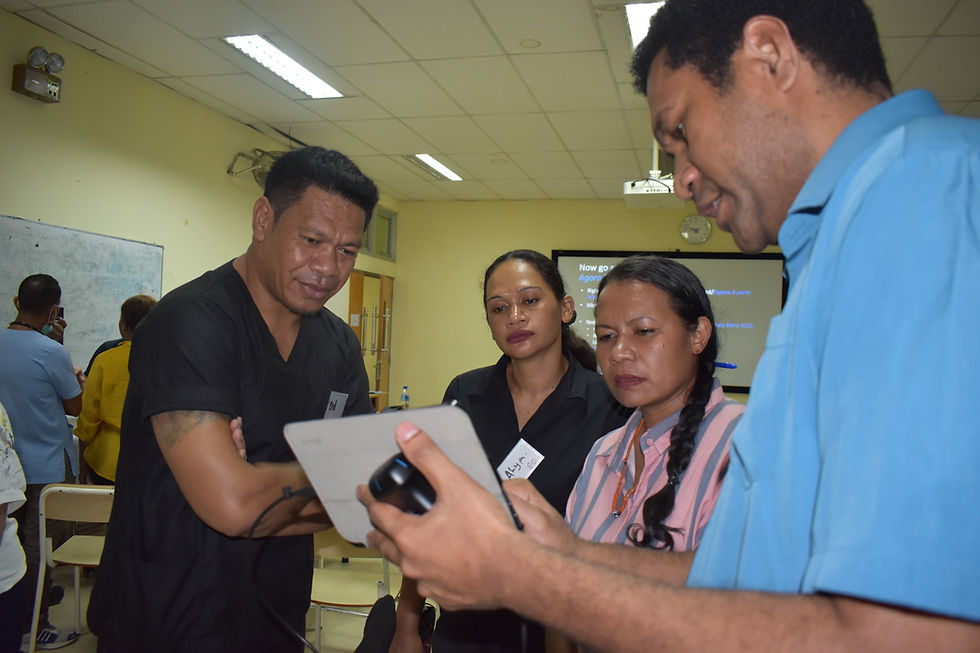
Strengthening critical care starts with local clinicians sharing knowledge, solving problems together, and leading change within their own health systems. Clinicians from Solomon Islands National Referral Hospital (NRH) participated in the first trial of the WHO Basic Critical Care (BCC) Course in the Pacific, held in Honiara from 8–12 June 2026.
26 doctors and nurses from across NRH - including clinicians from medical, surgical, paediatric, obstetrics and gynaecology, emergency, and High Dependency Unit (HDU) - took part in the four-day course. Developed by the World Health Organisation, the BCC course aims to improve the recognition and management of critically ill patients using essential, evidence-based critical care practices that can be delivered in any healthcare setting.

As one of the few sites globally that have piloted this course, it offers Pacific clinicians an opportunity to contribute their expertise and experience to the program's ongoing refinement. The lessons learned in the Solomon Islands will help shape how the course is adapted and delivered in diverse settings around the world.
The course is the result of a collaborative partnership between the Solomon Islands Ministry of Health and Medical Services, the National Referral Hospital, the World Health Organisation (WHO), the World Federation of Intensive and Critical Care (WFICC), and the Regional Emergency and Critical Care System Strengthening Initiative (RECSI) through its consortium partners SPC (The Pacific Community) and ANZICS (Australian and New Zealand Intensive Care Society).
The World Federation of Intensive and Critical Care (WFICC) provided financial support to the delivery of the program. WFICC President Javier Perez Fernandez noted the importance of partnership for delivery: “WFICC is collaborating with WHO in the promotion and delivery of the Basic Critical Care Course (BCCC) around the world… we believe that partnering with local authorities, organizations and institutions is the way forward in establishing a strong foundation for the growth of standards in critical care. As the certifying body for the BCCC we strive to provide continuity and consistent excellence in the content and the delivery of the BCCC with the ambition of developing and maintaining a worldwide registry of trainees and trainers. The BCCC hosted in Solomon Islands has been an example of a successful partnership among all the organizations involved. This partnership, when combined with brilliant execution, resulted in 26 physicians and nurses from the National Referral Hospital participating and refreshing their knowledge and skills to deliver the basic management of critical illness. They are now better skilled to care for the patients in the region.”

Dr Titus Nasi, Medical Superintendent of the National Referral Hospital, expressed his gratitude to the RECSI specialists for selecting the Solomon Islands as the regional pioneer for this training. “Strengthening critical care begins with local clinicians sharing knowledge, solving problems together, and leading change within our own health systems,” said Dr Nasi. “I encourage all our participants to fully utilise these skills. This training is vital for providing high-quality, safe care in resource-constrained settings, aligning directly with our clinical governance mandate to uphold the highest standards of patient safety.”

For many participants, the week was transformative. Loviness Sueli Marite, a junior nurse who participated in the training, reflected on the intensity and value of the experience:
“Being trained alongside such experienced doctors and nurses was an honour. This course challenged me, but it also reminded me of the importance of believing in one’s own potential. I am incredibly proud to be part of this first cohort and deeply grateful to the facilitators and my peers for their mentorship.”
The course was delivered by and alongside local clinical leaders, ensuring it is grounded in the lived experience of providing critical care in the Pacific. By supporting frontline clinicians and local leadership, the program continues to strengthen and build more resilient health systems.
Image 4 and 5: NRH staff Selina Kiriohimane and Flory Siope (left to right) provide a summary of Day 1 training highlights; Dr Trina Sale and nurse Doreen (right) of NRH demonstrating skills within the training program.
A BCC Training-of-Trainers (ToT) is scheduled to be piloted as part of the concurrent 13th Annual World Congress of the Federation of Pediatric Intensive and Critical Care Societies (WFPICCS) and the ANZICS and Australia College of Critical Care Nurses (ACCCN) Intensive Care Annual Scientific Meeting in Melbourne, Australia in late September 2026.
RECSI is funded by the Australian Government through the Partnerships for a Healthy Region initiative. Additional funding for the course delivery was provided by WFICCS.


I couldn't be happier with my purchase from their affordable used Kia cars in Italy inventory. The vehicle was in outstanding condition, came with a detailed service history, and has performed flawlessly since I drove it home. The dealership made the entire experience enjoyable by providing excellent customer service and helping me find the best car within my budget.