PNG Nurses: Strengthening Critical Care Capacity
Members of Papua New Guinea’s critical care nursing workforce have strengthened their skills in managing critically ill patients through Basic Assessment and Support in Intensive Care (BASIC) for Nurses training held from 6th to the 10th of October at Port Moresby General Hospital (PMGH).
Only the third BASIC for Nurses course delivered in PNG, the program was facilitated by local faculty from Papua New Guinea with instructors from Port Moresby, Lae, and Alotau.
The training commenced with a one-day instructor course for seven senior critical care nurses from PMGH, followed by the two-day provider course attended by 23 critical care and emergency nurses from Alotau, Mendi, Goroka, Port Moresby, Rabaul, and Wewak.
The BASIC for Nurses course is an internationally recognised program that equips nurses working in critical care and acute settings with essential knowledge and practical skills to assess, monitor, and manage critically ill patients. The program covers essential topics such as respiratory and cardiovascular physiology, airway management, mechanical ventilation, neurological assessment, and cardiopulmonary resuscitation (CPR). Participants engaged in skill stations focusing on real-world intensive care scenarios, including mechanical ventilation troubleshooting, intubation care, and communication during emergencies.

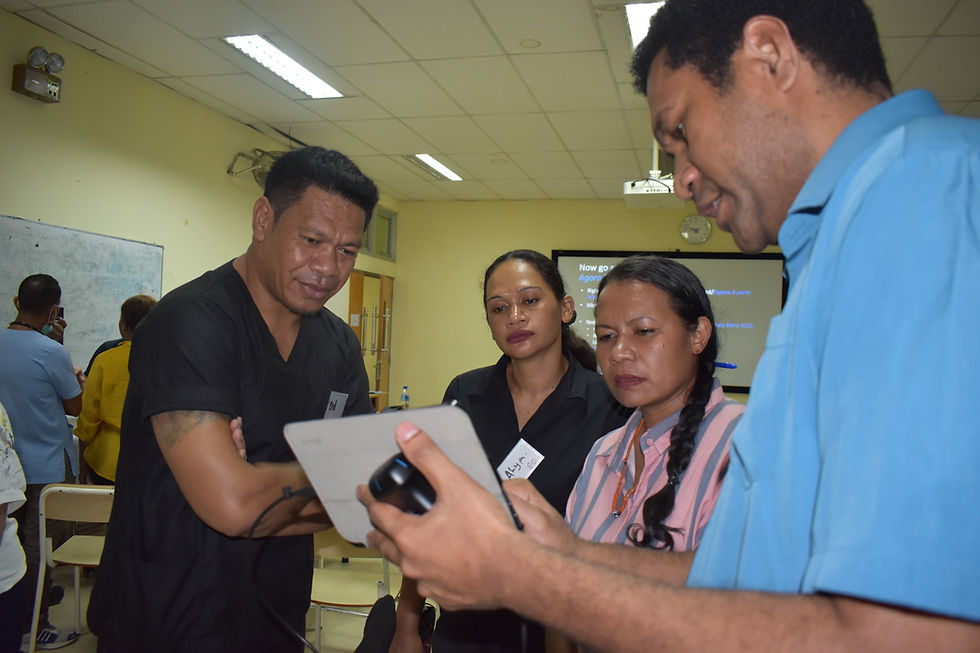
Image 1 provided by PMGH Media: BASIC for Nurses instructors Sr Kila Virobo and Sr Dulcie Nagivalena (second and third from left) facilitating skills stations as part of the BASIC provider course.
By combining lectures, skill stations and simulation-based learning, the course improves confidence and competence in the use of equipment and clinical techniques that participants can apply and share in their hospitals and provinces.
Sr Dulcie Nagivalena, Senior Nursing Officer from the Intensive Care Unit at Alotau Provincial Hospital noted the value of standardised approach to caring for critically ill patients:
“The course has been transformative, not only elevating my clinical practice as a nurse but also instilling the confidence to effectively mentor and teach colleagues. The standardised, international curriculum is invaluable, enabling us to harmonise our care standards and communicate with a shared, consistent language.”
Graduates of the instructor course now join the pool of accredited PNG BASIC for nurses faculty, contributing to the sustainability and growth of local critical care capacity throughout the country.

Image 2: Graduates and facilitators of the two day BASIC provider course at the completion of the program.
Following the BASIC for Nurses training program, local and international faculty undertook a further two days of critical care training workshops, bedside teaching and mentoring sessions delivered at PMGH.
Melissa Njoku, RECSI Nursing Advisor for Critical Care in PNG and Timor-Leste and Interim Clinical Co-Lead for Critical Care in PNG, noted that the training was designed to strengthen and empower nurses in their professional practice.
“Our goal for the training is to help empower nurses by providing some of the theoretical knowledge and the clinical skills training that they can take back to their workplaces and continue to educate the nurses that work alongside them. To help understand the rationale and the reasons behind our nursing care and to empower them to be able to advocate for their patients and for their colleagues.”
Programs like the BASIC for Nurses course continue to play a vital role in building capacity within PNG’s healthcare workforce, ensuring that nurses remain equipped to respond effectively to the complex needs of patients in critical care.
The courses and training sessions were funded by the Regional Emergency and Critical Care Systems Strengthening Initiative (RECSI) and the National Critical Care and Trauma Response Centre (NCCTRC) Regional Engagement Program. This initiative was made possible through the support of the Society of Anaesthetists of Papua New Guinea, the Australian and New Zealand Intensive Care Society (ANZICS), the Global Intensive Care Initiative, and in collaboration with the National Department of Health, Port Moresby General Hospital. RECSI is supported by the Australian Government through the Partnerships for a Healthy Region initiative. Course delivery was coordinated via RECSI’s implementing partner National St John Ambulance PNG.


Comments