Basic Emergency Care training in Mount Hagen upskilling local clinicians to provide timely emergency care to their communities
Updated: Nov 13, 2025
The Western Highlands Provincial Health Authority (WPHA) in Papua New Guinea has successfully hosted a series of Basic Emergency Care (BEC) courses at the Mt Hagen Provincial Hospital (MHPH) in August, providing essential and localised training to frontline healthcare workers from across the Highlands region.

Overall, 33 health care workers including nurses, health extension officers (HEOs), community health workers (CHWs) and doctors, from a number of provinces participated in the courses (2 provider courses and one training-of trainers workshop were deleiverd in total).The course facilitators and trainers included a mix of nurses, HEOs and doctors who became either newly certified or upskilled throughout the training delivery with the credentialling of six new master trainers, three registered facilitators, and seven provisional facilitators adding to the growing pool of trainers who have the capacity to deliver BEC courses locally across PNG.
WHPHA’s acting Chief Executive Officer Jane Holden commended the participants for their commitment and emphasized the importance of expanding the program . “This is not the end of the program as we have a major task ahead of us,” she said.
MHPH Emergency Department Head Dr John Junior McKup described the training as a standardized approach to emergency care and urged participants to use their new skills to become safe and fair practitioners.
Images 2 and 3: WPHA Acting CEO Jane Holden (left hand image) and MHPH Emergency Department Head Dr John Junior McKup (right hand image) gave remarks as part of the program proceedings.
Master trainer, Dr Jacklyn John, emergency physician at MHPH who coordinated and delivered the courses noted the importance of training healthcare workers throughout the region: “The WHPHA is the centre of the upper highlands and prone to receive more casualties due to migration and patients’ choice. Training a lot of the clinicians from district facilities is a dream come true. It is spreading the emergency care understanding and capability to the clinicians in the community based rural facilities so they can provide basic emergency care to casualties before they reach the main provincial hospital” she said.

With the generous support of partners from Laerdal Global Health, 5 Emergency Learning Lab training equipment packs were distributed to provincial participants to enhance the delivery of local BEC training.

Dr Clementine Goimba from the Southern Highlands Provincial Health Authority shared the long-term vision for the program, stating that the goal is to roll it out to districts across the country. “We want to cover all healthcare providers so we can limit the number of deaths and complications,” she said.
With newly certified trainers now ready to lead future sessions, the BEC program is becoming a foundation of emergency healthcare in PNG, driven by and empowering local clinicians, saving lives, and building a stronger health network nationwide.
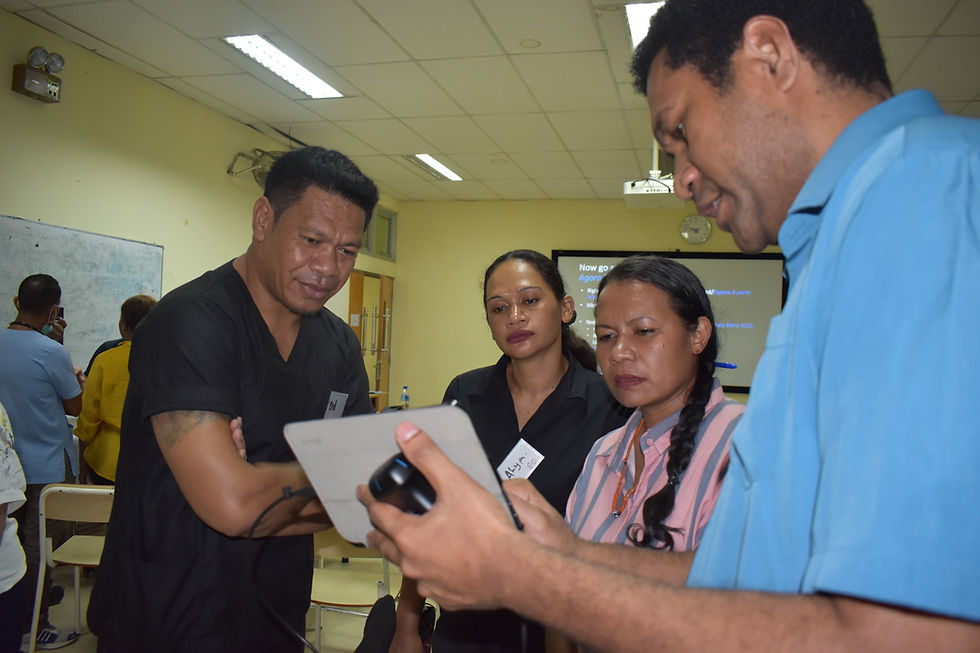
Images 6 and 7: Participants taking part in the classic provider course from the 11th - 14th of August, 2025 The BEC course was developed by the World Health Organization (WHO) in collaboration with the International Committee of the Red Cross (ICRC) and the International Federation for Emergency Medicine (IFEM). It is designed for first contact providers of emergency care in resource constrained settings and provides a safe and structured approach to managing acutely ill and injured patients.

These courses are being delivered as part of the Regional Emergency and Critical Care Systems Strengthening Initiative (RECSI), which is supported by the Australian Government through Partnerships for a Healthy Region (PHR). It has been actively supported by RECSI’s implementing partner National St John Ambulance PNG and the Australasian College of Emergency Medicine (ACEM) with the vital support of several PNG Provincial Health Authorities.

The courses also directly support the strategic priorities of the Pacific Regional BEC Course Steering Group that brings together over 16 regional organisations who have a shared mission to utilise BEC course as a vehicle for improving emergency care. It has established a Pacific BEC course implementation strategy with 5 strategic priorities to facilitate locally led and sustainable access to and delivery of BEC course training to frontline clinicians across the Pacific region.
More courses will be supported by the RECSI program, including upcoming courses in East New Britain and Port Moresby in November 2025.


Comments