Strategic Approach to Pacific Regional Basic Emergency Care Training
- mwratten3
- Jul 14, 2025
- 3 min read
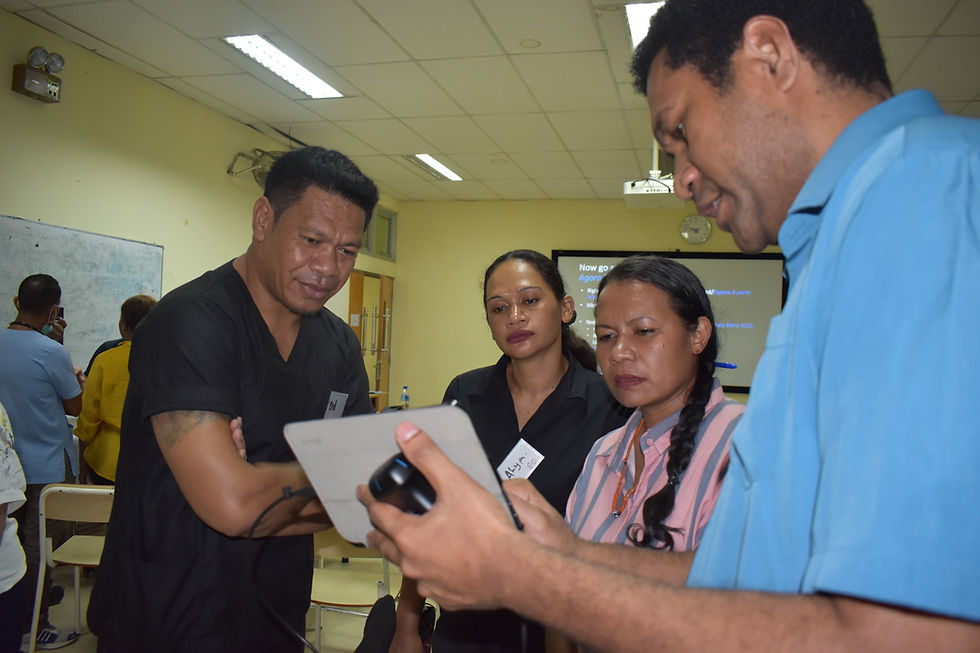
The Regional Emergency and Critical Care Systems Strengthening Initiative (RECSI) is proud to have supported the delivery of the first Pacific regional Basic Emergency Care course (BEC), attended by emergency care clinicians from across the Pacific region and Timor-Leste. The course was held from 2–4 June in Nadi, Fiji.

The BEC course was developed by the World Health Organization (WHO) in collaboration with the International Committee of the Red Cross (ICRC) and the International Federation for Emergency Medicine (IFEM). It is designed for first contact providers of emergency care in resource-constrained settings, and provides a safe, structured approach to managing the acutely ill and injured.
Speaking in Fiji, RECSI’s Program Lead for Emergency Care, Dr Rob Mitchell, said, “This delivery of Basic Emergency Care course training is a milestone for the Pacific region. Our team is particularly excited to see so many Pacific Island clinicians become credentialed as Basic Emergency Care trainers.”

Based on input and guidance from Pacific clinicians, RECSI partner organisations are working to support the delivery and roll-out of BEC training in a way that is contextualised and best suited to local workforce needs. In particular, RECSI aims to develop a pool of qualified trainers for the Pacific region who can sustainably deliver training in their own countries and settings. The recent training has resulted in 33 new provisional facilitators, 6 new registered facilitators and 3 new master trainers for the region.

In a video message to the Pacific Islands Society for Emergency Care, WHO Chief Nursing Officer, Dr Amelia Latu Afuhaamango Tuipulotu, offered congratulations to course participants:
“BEC represents a practical, proven tool to strengthen health systems, build first contact nurses’ and healthcare worker capacity, and save lives, today and for the future.”
Health workers trained through this program will be equipped to implement the training within their own healthcare facilities across the region, contributing to the WHO’s 25 x 25 Basic Emergency Care Saves Lives campaign, launched by the WHO Chief Nursing Officer in 2023.
Images: (L-R) Dr Pafilio Jr Tangitau (Tonga); BEC Master Trainer Dr Garry Nou (PNG); Dr Shamayel Shafiee Allaf (Vanuatu); Luisa Vodotagitagi (Fiji)
The training also offered an opportunity to launch the Strategic Framework for Pacific BEC Course Implementation, a global first in terms of a collaborative and regional approach to rolling out BEC training. The interagency Pacific Regional BEC Steering Group, which identified the strategic priorities, consists of key stakeholders with a shared motivation and vision to effectively upscale the implementation of BEC training across Pacific Island Countries and Territories.
Dr Jennifer Jamieson, Chair of the Pacific Regional BEC Steering Group and Australasian College for Emergency Medicine Global Emergency Care Committee, said the regional approach offered a unique opportunity to coordinate action and maximise impact.
“The regional BEC steering group was established at the end of last year and held its inaugural meeting in January,” she said. “Importantly, the group is prioritising BEC participation for nurses to ensure a greater number of nurse facilitators and Master Trainers.”

RECSI is supported by the Australian Government through the Partnerships for a Healthy Region Initiative. Delivery of this training was facilitated by the Pacific Community (SPC) – RECSI’s implementing partner for the Pacific – in collaboration with the Australasian College for Emergency Medicine. The training also received support from St Vincent’s Hospital Melbourne’s Pacific Health Fund for participant travel from around the region, and from Laerdal Global Health.

“This is a timely and important step forward,” said Dr Silina Motofaga, Team Leader, Clinical Services Program, Public Health Division, SPC. “We must continue to support this effort so that at least 80% of our frontline health workers are equipped with the skills and knowledge to respond effectively to health emergencies, natural disasters, and any crisis within their communities.”
This successful regional initiative marks a significant step in strengthening emergency care systems across the Pacific, ensuring health workers are better prepared to respond to emergencies and save lives.


Thanks for supporting pacific Islands