Timor-Leste clinicians strengthen regional emergency and critical care through observership at Royal Darwin Hospital
(English translation is provided below)
Profisional Saúde Timor-Leste sira Haforsa Emerjénsia no Kuidadu Krítiku Rejional liu-husi Observasaun iha Royal Darwin Hospital (RDH)
Profisional Saúde na’in ha’at husi Timor-Leste, foin lalais remata ona observasaun klínika espesializadu ida iha Royal Darwin Hospital (RDH), ne’ebé fó oportunidade atu hetan esperiénsia prátika direta iha kuidadu emerjénsia no krítiku, nu’udar parte husi esforsu rejional atu hametin sistema saúde iha nasaun viziñu Austrália nian.
Doutór na’in rua no enfermeiru na’in rua realiza observasaun durante semana rua iha Emergency Department (ED) no Intensive Care Unit (ICU), nu’udar parte husi Regional Emergency and Critical Care Systems Strengthening Initiative (RECSI), ho Menzies School of Health Research hanesan parseiru implementadór. RECSI suporta parceria entre servisu saúde Austrália no parseiru rejional sira atu haforsa kapasidade servisu emerjénsia no kuidadu kritiku ne’ebé sustentável iha Pasífiku no Timor-Leste.
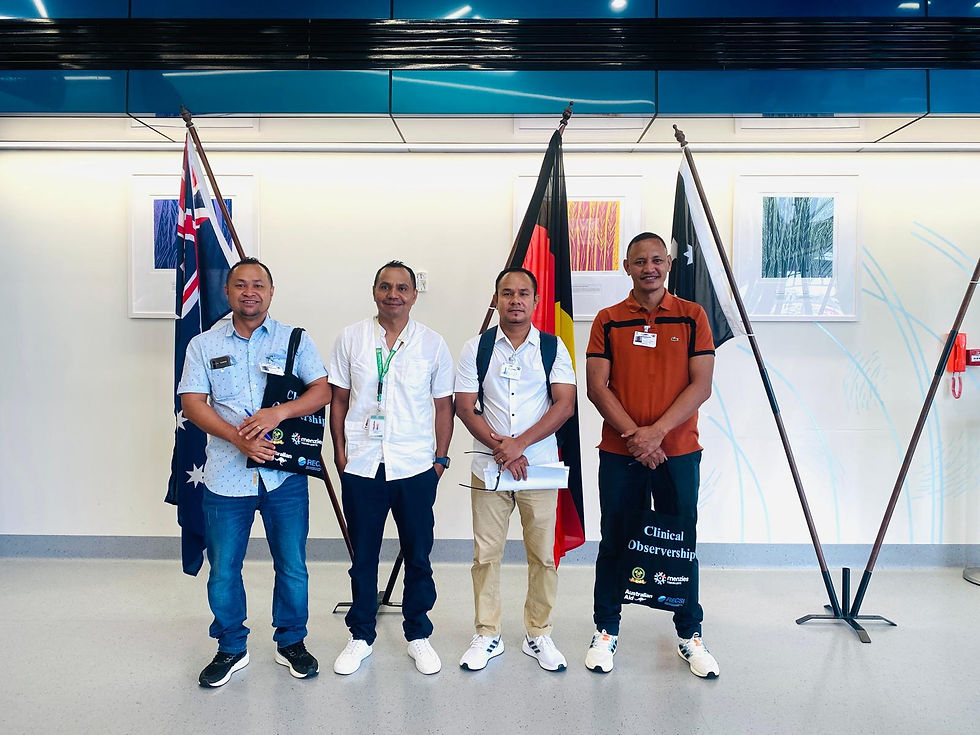
Profisional saúde sira ne’e mai husi Hospital Nacional Guido Valadares (HNGV), ospitál referénsia tersiaria úniku iha Timor-Leste. Durante sira-nia observasaun, profisional saúde sira servisu hamutuk ho ekipa RDH atu dezenvolve koñesimentu no abilidade iha triajen, reanimasaun agudu, jestaun trauma, tratamentu sepsis, no prestasaun kuidadu krÍtiku iha situasaun pasiente ho kondisaun grave. Programa ne’e mos foka ba aprendizajen bazeia ba sistema, inklui komunikasaun ekipa, fluxu pasiente, no koordenasaun servisu emerjénsia no kuidadu intensivu. Profisional saúde sira mos hetan oportunidade atu partisipa iha sesaun edukasaun, treinamentu simulasaun klínika, trauma no grand rounds pediatría nian, no treinamentu kona-ba seguransa kultural no komunikasaun interkultural lidera husi Menzies.
“Biban ida ne’e ajuda atu kompriende ambiente servisu lor-loron ne’ebé lais no dinâmiku iha departamentu emerjénsia, hadi’a rede profisionál, no fó oportunidade atu hasoru sistema médiku oin-oin… Hau hakarak kontinua monitoriza buat sira ne’ebé ami observa ona no bele halo mudansa balun, la para de’it iha tempu ida ne’e, se bele kontinua tan atu halo mudansa boot liu iha futuru,” dehan Doutór ED Thomas Abilio.

Durante sira-nia vizita iha Darwin, profisional saúde sira mos vizita National Critical Care and Trauma Response Centre (NCCTRC), komponente importante ida husi kapasidade preparasaun no resposta emerjénsia saúde Governu Austrália nian. NCCTRC mos parseiru ida iha konsórsiu RECSI. Vizita ne’e fó kompriensaun kona-ba abordajen Austrália iha preparasaun dezastre, resposta trauma, no planeamentu kapasidade emerjénsia (surge capacity) – área relevancia komun ba Timor-Leste bainhira kontinua haforsa sistema preparasaun emerjénsia nasionál.

Kolokasaun ida ne’e suporta aprendizajen mutu’u, ho ekipa RDH hetan kompriensaun kona-ba oinsá atendimentu emerjénsia fornese iha Timor-Leste no realidade servisu iha ambiente ho rekursu limitadu. Ba profisional saúde sira ne’ebé partisipa, programa ne’e fó persesaun valiozu atu bele adapta tuir sira nia planu ba konteksu lokal bainhira sira fila fali.
“Observasaun sira ne’e la’ós foka de’it ba abilidade individual, maibé mos ba haforsa sistema sira,” dehan Sarah Bornstein, Konselheira Enfermajem Kuidadu Emerjénsia ba programa RECSI. “Liu-husi apoiu ba profisional saúde sira hodi hetan esperiénsia k observa sistema no prosesu oin-oin iha servisu emerjénsia no kuidadu kritiku iha Darwin, ami hein katak observadór sira sei lori fali ideia foun ne’ebé bele adapta ba sira-nia ambiente klínika rasik. Biban diak ida mos atu hare’e sira liga ho profisional saúde sira iha Austrália no partilha istória no ideia sira husi konteksu Timor-Leste.”
RECSI mak inisiativa ida ne’ebé bazeia ba parceria, hetan apoiu husi Governu Austrália liu-husi Partnerships for a Healthy Region Initiative. Inisiativa ne’e foka ba haforsa sistema emerjénsia no kuidadu kritiku liu-husi edukasaun, esperiénsia klínika, ko-dezeñu, no kolaborasaun tempu naruk.
Iha tinan 2026, profisional saúde na’in ualu tan husi Timor-Leste planeadu ona atu kompleta observasaun klínika iha RDH. Programa observasaun iha RDH kontribui ba aprofundamentu parceria klínika entre Austrália no rejiaun viziñu sira, hametin kompromisu hamutuk atu fó atendimentu emerjénsia no kuidadu kritiku ne’ebé ho kualidade a’as ba ema hotu.
Four clinicians from Timor-Leste have completed a specialised clinical observership at Royal Darwin Hospital (RDH), gaining hands-on experience in emergency and critical care as part of a regional effort to strengthen health systems in Australia's neighbouring countries.
The two doctors and two nurses undertook a two-week observership placement in the Emergency Department (ED) and Intensive Care Unit (ICU) as part of the Regional Emergency and Critical Care Systems Strengthening Initiative (RECSI), with Menzies School of Health Research as the implementing partner. RECSI supports partnerships between Australian health services and regional counterparts to strengthen sustainable emergency and critical care capacity in the Pacific and Timor-Leste.
The visiting clinicians were from Hospital Nacional Guido Valadares (HNGV), Timor-Leste’s only tertiary referral hospital. During their observership, the clinicians worked alongside RDH teams to develop knowledge and skills in triage, acute resuscitation, trauma management, sepsis care, and the delivery of critical care in high-acuity settings. The program also focused on systems-based learning, including team communication, patient flow, and the coordination of emergency and intensive care services. Clinicians had the opportunity to join education sessions, clinical simulation training, trauma and paediatric grand rounds, and cultural safety and intercultural communication training led by Menzies.
“It helps to understand the daily, fast-paced environment of the emergency department, improves professional networking, and provides exposure to different medical systems… I wish to continue to monitor what we observed and can make some changes and don’t stop this time if we can continue for more time to make more changes in the future”, shared ED Doctor Thomas Abilio.
During their visit to Darwin, the clinicians also visited the National Critical Care and Trauma Response Centre (NCCTRC), a key component of the Australian Government’s health emergencies preparedness and response capability. The NCCTRC is also a partner in the RECSI consortium. The visit provided insight into Australia’s approach to disaster preparedness, trauma response, and surge capacity planning - areas of shared relevance for Timor-Leste as it continues to strengthen national emergency preparedness systems.

The placement supported mutual learning, with RDH staff gaining greater insight into emergency care delivery in Timor-Leste and the realities of working in low-resource settings. For the visiting clinicians, the placement offered valuable insights they plan to adapt to their local context on returning home.
“The observerships are focused on strengthening systems, not just individual skills,” said Sarah Bornstein, Emergency Care Nursing Advisor for the RECSI program. “By supporting the clinicians to experience different systems and processes in emergency and critical care here in Darwin, we hope the observers take new ideas home that they can adapt to their own clinical settings. It’s also been great to see them connect with clinicians in Australia and share stories and ideas from the Timor-Leste setting.”
RECSI is a partnership-based initiative supported by the Australian Government through the Partnerships for a Healthy Region Initiative. It is focused on strengthening emergency and critical care systems through education, clinical exposure, co-design, and long-term collaboration.
Eight additional clinicians from Timor-Leste are scheduled to complete a clinical observership at RDH in 2026. The observerships at RDH contribute to deepening clinical partnerships between Australia and its neighbouring region, reinforcing a shared commitment to high-quality emergency and critical care for all.
RECSI is supported by the Australian Government under the Partnerships for a Healthy Region initiative.


Comments