Pacific achievements in emergency and critical care strengthening highlighted at World Health Assembly
Pacific-led progress in emergency, critical and operative care was highlighted in Geneva last night at an official World Health Assembly (WHA) side event focused on translating global strategy into country impact.
The event, ‘From Global Strategy to Country Impact: Scaling Emergency, Critical and Operative Care’, brought together Ministers of Health, World Health Organization (WHO) officials, donors and implementation partners to discuss how the WHA76.2 resolution and the draft Global Strategy for Integrated Emergency, Critical and Operative Care can support practical implementation in countries.
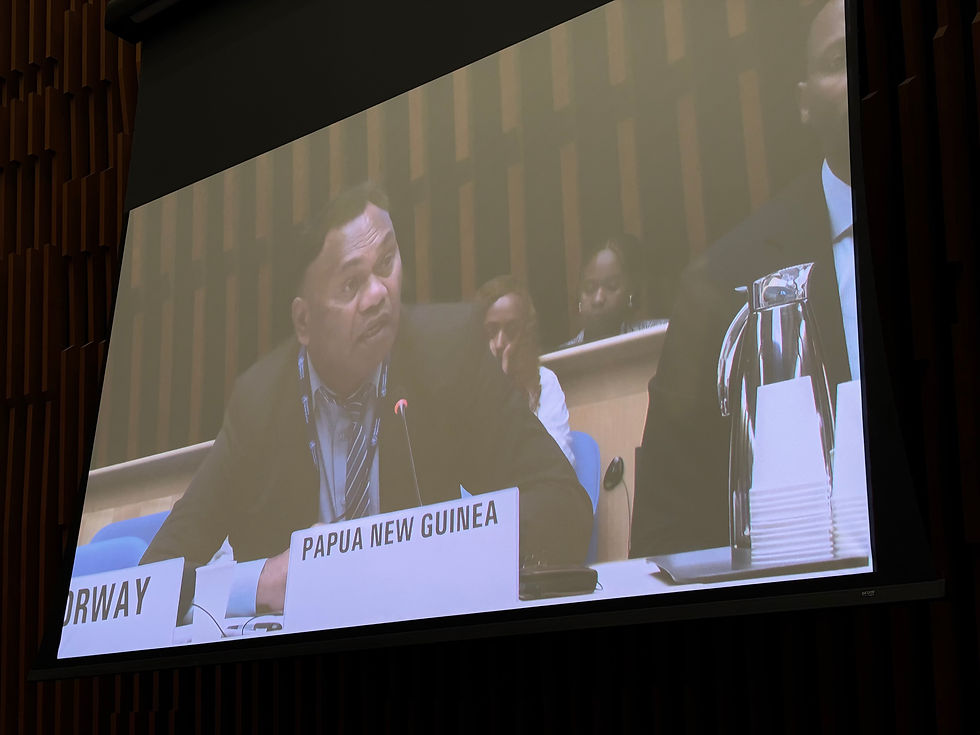
Speaking on Papua New Guinea’s experience, Dr Daoni Esorom from the National Department of Health highlighted the challenge of connecting different parts of the health system across difficult geography, remote communities, high transport costs and uneven access to health facilities.
“Emergency, critical and operative care depends on strong links between communities, health centres, ambulance services, district hospitals, provincial hospitals and tertiary facilities,” Dr Daoni said.
“In PNG, those links are not always consistent. Referral can be delayed by distance, weather, road conditions, communication gaps and limited ambulance coverage.”

He also emphasised the importance of workforce, infrastructure and data, noting the need for more frontline health workers trained to recognise and manage acute illness and injury early, particularly in rural and remote settings. As an example of a positive development related to data, Dr Daoni highlighted the recent implementation of a critical care registry system at Port Moresby General Hospital. This work has been supported by RECSI through the Australian and New Zealand Intensive Care Society.
Dr Daoni’s remarks also emphasised that the WHO-International Committee of the Red Cross Basic Emergency Care (BEC) course is playing a critical role in PNG because it includes doctors, nurses, health extension officers and community health workers. This reflects significant, collaborative efforts by PNG clinicians, the National Department of Health, National St John Ambulance PNG and the Australasian College for Emergency Medicine, through the support of RECSI, to rapidly scale up BEC implementation in the country.
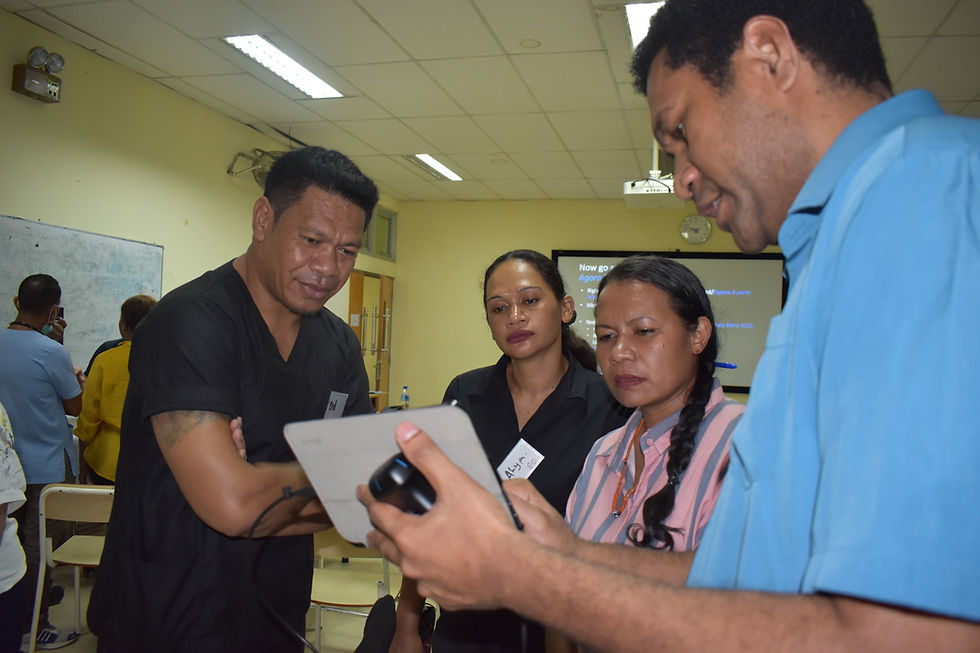
Across the broader Pacific, BEC has undergone a major expansion phase through a coordinated, regional approach. By the end of 2025, 45 BEC provider and training-of-trainers courses had been delivered in eight countries, involving more than 460 participants and facilitators from 16 Pacific Island Countries and Territories, Australia and Aotearoa New Zealand.
This Pacific-wide scale-up of BEC was also highlighted during the side event, with Dr Amanda Fehn, Nursing Technical Officer at WHO, noting the rapid progress being made across the region. This progress reflects a growing Pacific emergency care community, with locally led training cascades, stronger regional coordination and increasing participation from non-medical clinicians. In the Pacific, nurses made up approximately half of BEC participants and facilitators trained in 2025, reinforcing the central role of nursing leadership in strengthening frontline emergency care.

At the same time as the Geneva event was taking place, the Pacific-to-Pacific model was being demonstrated in practice: the first BEC course delivered in Tonga was underway, enabled by two nurse master trainers from Solomon Islands. This collaborative approach will provide an example for other Pacific Island Countries to follow.

The draft Global Strategy for Integrated Emergency, Critical and Operative Care is expected to be considered by Member States on Wednesday 20 May.
RECSI receives support for our activities across PNG and the broader region from the Australian Government through the Partnerships for a Healthy Region initiative.


Comments